The Environmental Impact of Lab Equipment: Why Refurbished Matters
By Pipettes Guru
The Real Cost of a Disposable Lab Culture
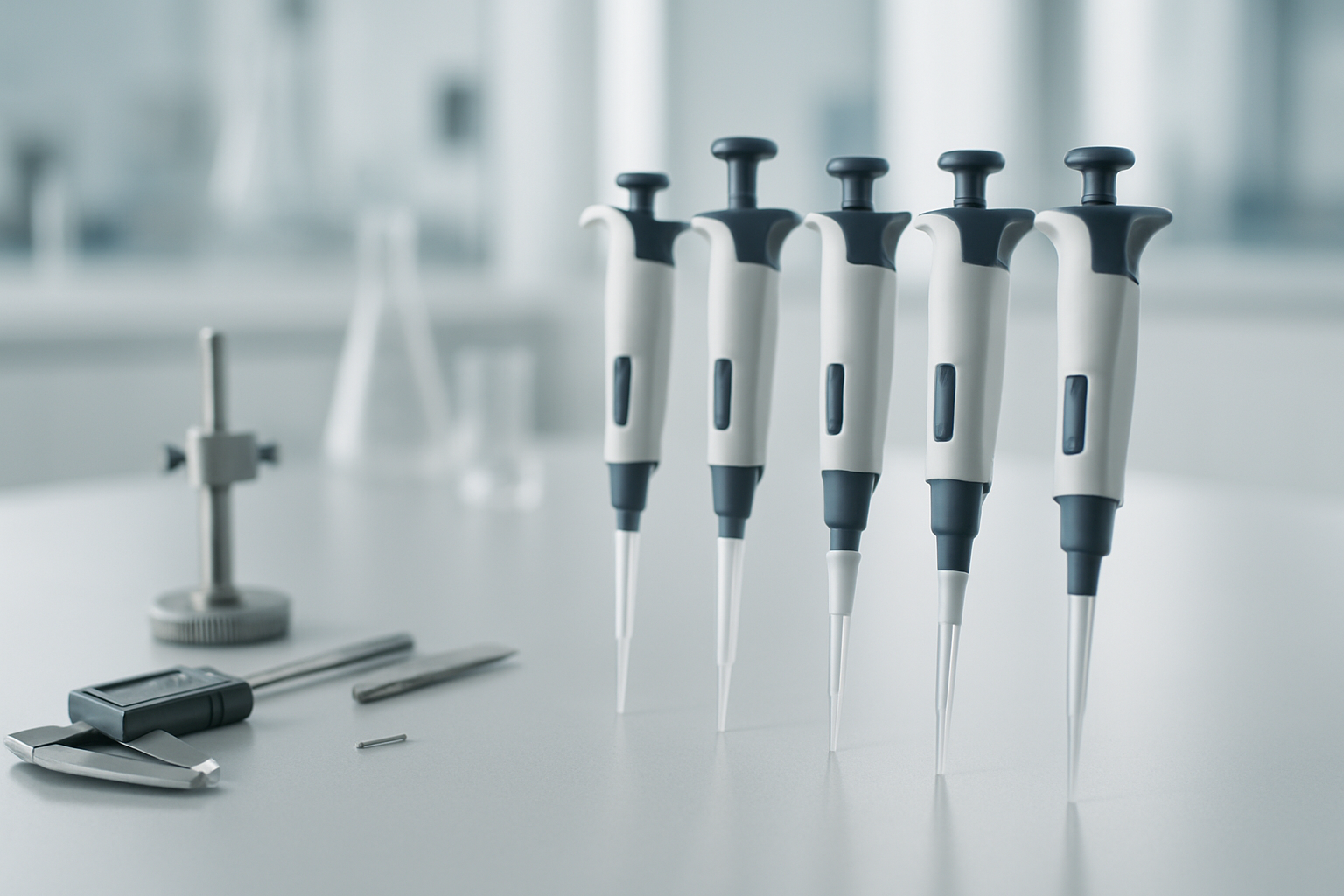
A single-channel Eppendorf Research plus has about 200 individual components — springs, o-rings, ejector mechanisms, a precisely machined piston — and most labs treat it as effectively disposable the moment the warranty lapses. That bothers me. I've been working in pipette refurbishment and calibration for over a decade, and the volume of serviceable equipment that gets landfilled every year is genuinely staggering. Not broken equipment. Serviceable equipment.
The environmental impact of laboratory operations doesn't get the same airtime as, say, single-use plastics in clinical settings, but it should. A 2022 survey by the journal Nature Sustainability estimated that global research labs generate approximately 5.5 million tonnes of plastic waste annually — and that figure doesn't even account for the metal, electronic, and polymer waste from discarded instruments. Pipettes alone represent a meaningful slice of that. A Gilson PIPETMAN Classic P1000 weighs roughly 120 grams. Multiply that across a mid-size university's annual instrument turnover, and you're talking hundreds of kilograms of mixed-material waste that almost never gets properly separated for recycling.
The circular economy framework — the idea that products should cycle back into productive use rather than flow linearly toward disposal — is an obvious fit for lab equipment. The components degrade slowly. The performance standards are well-defined. And critically, there's a clear, established protocol for verifying that a refurbished instrument meets those standards before it goes back into service.
What "Certified Refurbished" Actually Means (and Why ISO 8655 Is the Benchmark)
I want to be specific here, because the phrase "refurbished" gets stretched in ways that frustrate me. In our process, certified refurbished means the instrument has been fully disassembled, inspected, cleaned, and rebuilt with any worn components replaced — then calibrated gravimetrically against ISO 8655 specifications before it ships. That's not a marketing claim. That's a measurable outcome.
ISO 8655 — specifically Parts 1 and 2 for piston-operated volumetric apparatus — defines allowable systematic error and coefficient of variation at multiple test volumes. For a 1000 µL single-channel, the standard specifies a maximum systematic error of ±0.8% and a maximum CV of 0.15% at the full-rated volume. At 100 µL (10% of rated volume), tolerances tighten considerably — systematic error must stay within ±2.5%. Those aren't arbitrary numbers. They're the thresholds where volumetric inaccuracy starts to introduce meaningful experimental error.
Last spring, a customer shipped back a Rainin Pipet-Lite XLS 12-channel they'd been using for reformatting assays. They'd noticed their absorbance reads were drifting across columns — not wildly, but enough to worry them. When we ran gravimetric testing across all twelve channels at 10 µL (within the instrument's 5–120 µL range), six channels were running 2–3% low at that volume. Not a seal failure. Not a cracked piston. Just wear-induced compression loss in the o-ring stack. Twenty minutes of rebuild work, fresh Rainin-spec seals, recalibration — it went back out the door performing within ISO 8655 tolerances across all twelve channels. The customer paid about 40% of new-instrument price. A brand-new LTS-compatible 12-channel in that range runs $900–$1,100 depending on configuration. They paid under $400.
That's the sustainability argument and the economic argument converging at the same point. They usually do.
The Calibration Data Doesn't Lie
Every instrument we ship carries a calibration certificate with the actual gravimetric data — not a checkbox saying "passed inspection." I think that matters for lab managers and procurement officers who need documentation for audits or accreditation purposes. If your lab operates under CAP, CLIA, or ISO 17025, your pipette calibration records are part of your quality system. A certified refurbished instrument with traceable calibration data fits that system. A used instrument someone bought off an auction site does not.
Tips, Sterility Windows, and the Waste Nobody Talks About
Pipette tips are a harder sustainability problem than pipettes themselves, because the volumes are so much larger. A single researcher doing routine liquid handling might go through 500–1,000 tips in a busy week. At scale, across a department, that's a significant recurring waste stream — and most of it is perfectly avoidable.
One category worth understanding is sterility-extended tips. Manufacturers assign a sterility expiration date to their tip products — typically two to three years from date of manufacture — but that date reflects sterility assurance, not physical or dimensional integrity. For non-sterile applications: teaching labs, buffer prep, DNA extraction workflows that don't require RNase-free conditions, routine dilution series — the sterility date is simply irrelevant. When a manufacturer issues a formal extension letter confirming the physical specifications remain within tolerance (we're talking dimensional stability, fit on the barrel, seal integrity on LTS LT-1000s and equivalent formats), those tips are fully suitable for that work. We stock sterility-extended tips at 60–80% off standard pricing for exactly that reason. The plastic is the same. The geometry is the same. The only thing that's changed is a calendar date that didn't apply to your workflow in the first place.
I've had procurement officers tell me their lab policy prohibits anything past labeled date, full stop. I understand the reflex — it feels like a risk-management position. But the risk it's managing isn't real in non-sterile contexts, and the cost of that policy is both financial and environmental. It's worth pushing back internally with documentation in hand.
Building a Green Lab Practice That Actually Holds
Sustainability in lab settings tends to fail when it's treated as a values statement rather than a workflow change. The labs I've seen make real progress on their environmental footprint do a few specific things differently.
- They treat pipettes as capital equipment, not consumables. Annual service contracts, internal calibration checks between service intervals, and a clear decommission-versus-repair decision process. A Gilson PIPETMAN M (the electronic variant) costs $600–$800 new. A rebuild and recertification runs $150–$200. The math isn't complicated.
- They audit their tip usage by application. Not all workflows need virgin, sterility-certified tips. Segregating applications by contamination risk lets you route a significant portion of tip purchases toward lower-cost, lower-impact options without touching your critical assays.
- They document refurbished instrument performance longitudinally. If a refurbished Eppendorf Research plus is hitting ISO 8655 targets at service intervals just as consistently as a new instrument — and in my experience, it is — that data makes the case internally for expanding the refurbished procurement program.
- They talk to their instrument vendors about take-back. Not all suppliers offer this, but the conversation itself shifts purchasing relationships in useful directions.
The green lab movement has sometimes gotten tangled up in feel-good signage and recycling bins near the gel room. Real impact comes from procurement decisions — and certified refurbished equipment is one of the highest-leverage procurement decisions a lab can make. The instrument performs to the same accuracy standard. The documentation holds up under audit. And you're keeping a precision instrument in productive service instead of sending it to a landfill.
That's not a compromise. That's just a better decision.
Every instrument is calibrated to ISO 8655, backed by a 90-day warranty, and ships with its certificate.
Shop refurbished pipettes →✓ Free shipping over $500 · ✓ 90-day warranty · ✓ Calibration certificateRelated guides
- Refurbished Pipettes: The Complete Buyer’s Guide (start here)
- Quality Assurance in Pipette Refurbishment: What Certification Really Means
- Budget-Smart Lab Setup: Building a Complete Pipetting Station Without Overspending
Shop the range
Certified refurbished pipettes · This week’s deals · Browse the full catalog